Using Artificial Intelligence to Decarbonize the American Home
In the United States, residential buildings are responsible for approximately twenty percent of total energy consumption. While many homeowners express a desire to reduce their carbon footprint and lower their utility bills, fewer than one percent possess the specific technical knowledge required to effectively retrofit a home for maximum efficiency.
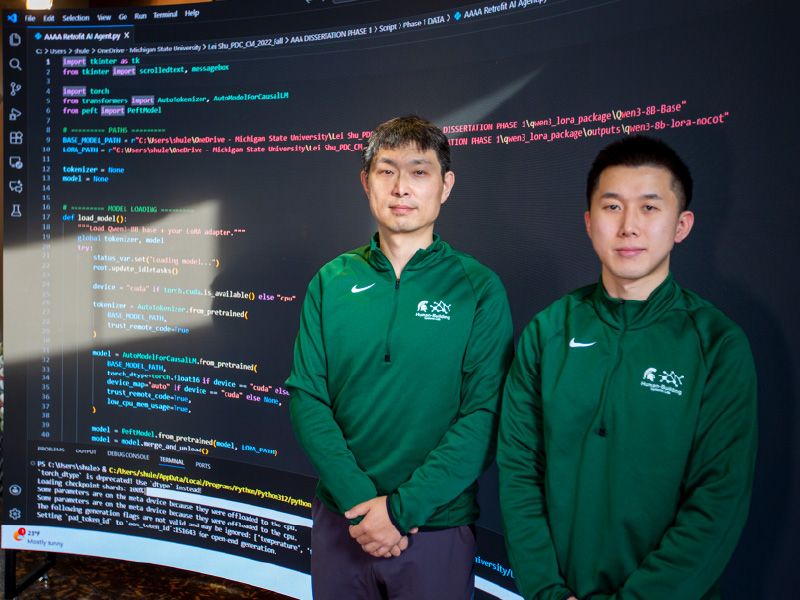
This knowledge gap is the primary focus of Dong Zhao, an Associate Professor in the School of Planning, Design and Construction, and Lei Shu, a Ph.D. student in Construction Management. By leveraging the power of high-performance computing and artificial intelligence (AI), they are developing a sophisticated tool designed to act as a bridge between complex climate data and the everyday homeowner. Their AI Energy Agent is not merely a calculator, but a digital consultant that synthesizes millions of data points to provide personalized and actionable advice. Their goal is to democratize sustainability, turning the daunting task of home energy management into a simple, data-driven process that benefits both the environment and the individual’s bank account.
The Complexity of Sustainable Retrofitting
Retrofitting a home is a multifaceted challenge that involves far more than simply replacing a few lightbulbs or adding insulation. To truly optimize a building for carbon neutrality, one must consider a dizzying array of variables, including the local climate, the specific age and construction of the structure, the efficiency of existing heating and cooling systems, and the potential impact of various technology combinations. For the average person, determining the exact point where a technological investment results in the highest carbon reduction with the shortest payback period is nearly impossible. This is where the AI Energy Agent steps in to handle the heavy lifting of the decision-making process.
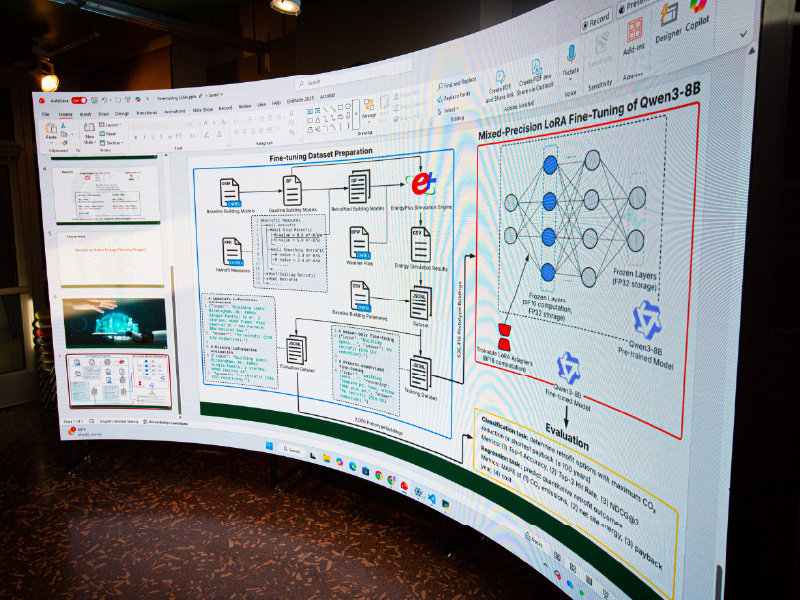
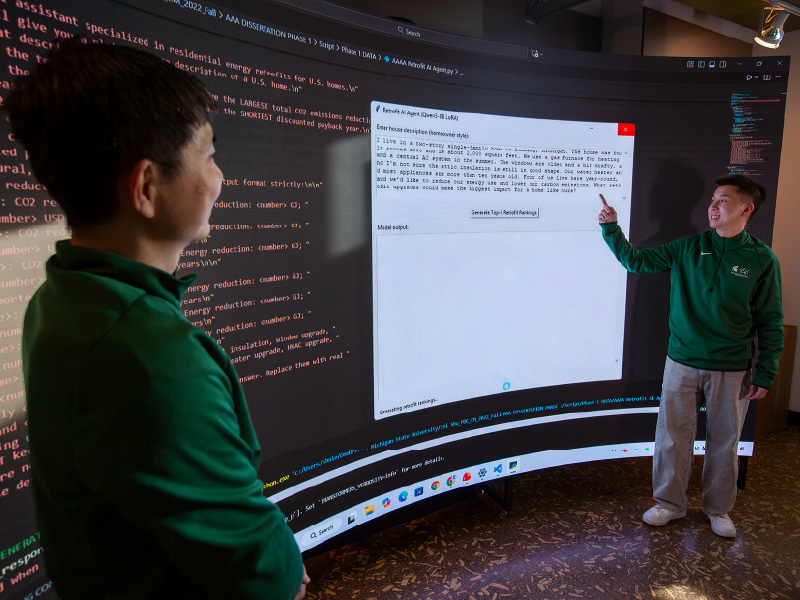
The agent functions by analyzing the specific parameters of a residence and comparing them against a vast database of building performance models. It evaluates various retrofitting strategies, such as installing heat pumps, upgrading window glazing, or integrating solar panels, to find the optimal balance for each unique user. The research team is specifically focused on two primary metrics: minimizing carbon dioxide emissions and minimizing the time to financial benefit for the user. By providing homeowners with a clear timeline for when their energy savings will exceed the initial cost of the upgrades, the AI agent removes the financial uncertainty that often prevents people from taking action.
Processing Big Data on a Global Scale
The intelligence behind this agent is built upon a foundation of massive datasets that describe how buildings interact with their environments. To train a reliable AI model, Zhao and Shu must run millions of high-fidelity simulations that account for different weather patterns, building materials, and technological configurations. The volume of data generated by these simulations far exceeds the processing capabilities of standard office computers. Without specialized resources, the time required to train the AI to a level of professional accuracy would be measured in years rather than weeks.
To overcome these computational hurdles, the team relies heavily on the Institute for Cyber-Enabled Research at Michigan State University. By utilizing the High-Performance Computing Center, the researchers can offload intensive calculations to a network of powerful nodes. This allows them to process big data at a scale that was previously unthinkable. The facility enables the team to iterate on their models quickly, refining the AI’s ability to predict energy outcomes with high precision.
From Individual Homes to the Urban Fabric
While the current iteration of the AI Energy Agent focuses on individual residential buildings, the researchers have their sights set on a much larger horizon. As Shu approaches the final stages of his doctoral studies in Construction Management, he is already expanding the project’s scope to include urban energy planning. This transition represents a shift from looking at a single structure to analyzing the energy dynamics of entire cities. Shu’s dissertation explores how AI can be used to optimize energy use at the neighborhood or city block level, creating a blueprint for smart cities that operate as integrated, carbon-neutral systems.
This expanded vision recognizes that buildings do not exist in isolation. In an urban environment, the energy needs of one building can be influenced by the shade of a neighbor or the shared infrastructure of a local power grid. By scaling the AI agent to the city level, planners and municipal leaders can gain a comprehensive understanding of how to implement large-scale sustainability initiatives. Shu’s research aims to provide city planners with the same expert-level guidance that the AI agent currently provides to homeowners.
The Human Element in Energy Transition
One of the most innovative aspects of the team's upcoming research involves the integration of human-centric science. Zhao and Shu understand that even perfect data is useless if people are not willing to act on it. The next stage of their project investigates the psychological and social factors that influence how residents interact with technology. They are investigating how to gain cooperation from individuals who may be skeptical of AI or unmotivated by environmental concerns alone.
The researchers have found that while carbon reduction is a significant goal, economic motivation remains one of the most powerful drivers for change. By emphasizing the money-saving potential of the retrofits, the AI agent can appeal to a broader audience. The team is looking into how the delivery of information affects user behavior, aiming to make the transition to green energy as easy and profitable as possible. By addressing the human side of the equation, the team is ensuring that their research results in real impact rather than remaining confined to academic journals.
A Vision for Universal Sustainability
The ultimate goal of this research is to create a product that is accessible to every person who lives in a residential building. Zhao believes that the tool they are developing could eventually become a standard part of home ownership, providing ongoing guidance as technology and climates continue to evolve. With the project already several years into development, the team is nearing a stage where their findings can be translated into a functional tool for the public. For Shu, who plans to graduate next semester, this work represents the first step in a career dedicated to creating smarter and more sustainable urban environments.