The Speed of Life: Developing Rapid Diagnostic Methods for Critical Illnesses
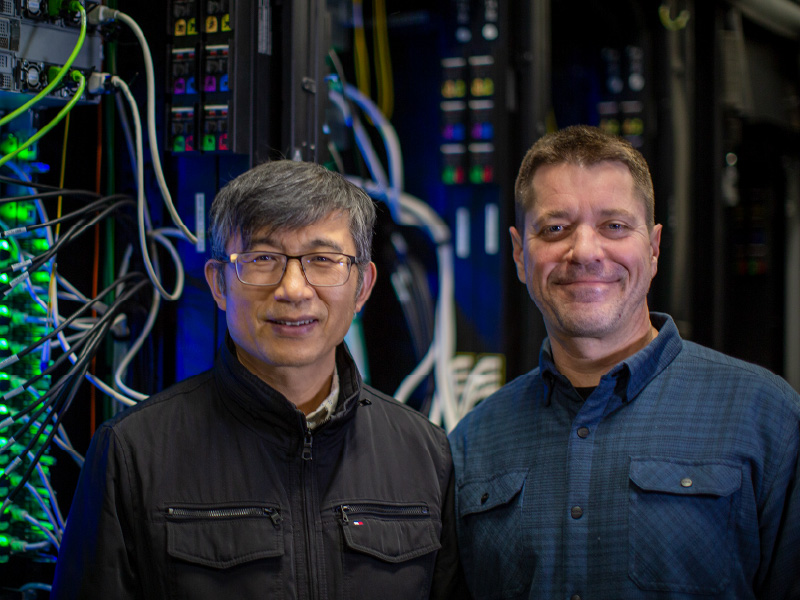
In the high-stakes environment of an emergency room, time is the most valuable resource. At Michigan State University, Assistant Professors Brett Etchebarne and Zenggang Li, both from the Department of Osteopathic Medical Specialties, are working to ensure doctors can use every second effectively. The duo focuses on developing rapid diagnostic methods for critical illnesses, specifically sepsis. This condition kills many and often leaves survivors with persistent, debilitating medical problems. Their ultimate vision is a precision medicine standard where a patient's entire medical status can be identified at the point of care in just four hours.
The Challenge of Genomic Sequencing
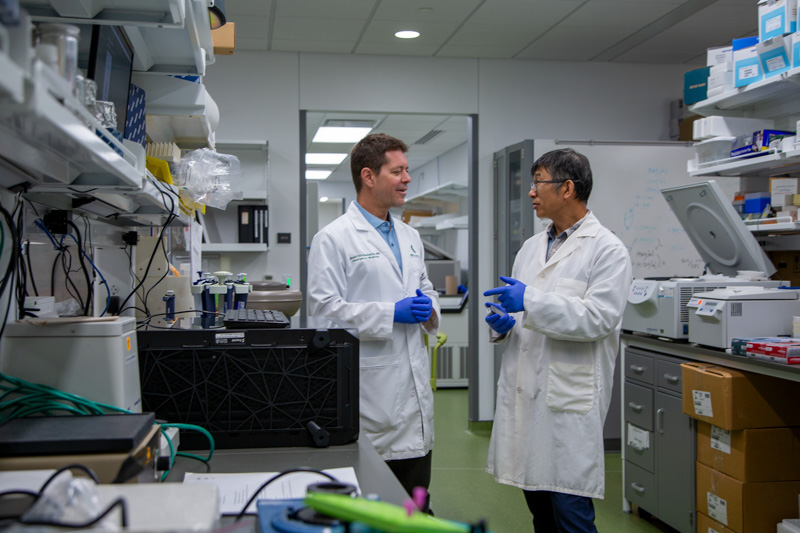
To achieve such rapid results, the team utilizes advanced DNA and RNA amplification and sequencing. This process involves reading the billions of base pairs that make up the genetic code of a patient and any invading pathogens. Etchebarne compares the process to assembling a massive puzzle. Some methods provide large, easy-to-place pieces, while others result in thousands of tiny fragments that must be carefully reconstructed into a complete picture.
One of their primary tools is the MinION Nanopore, a portable sequencer about the size of a hand. While the physical device is small, the raw data it produces is enourmous. Analyzing this information specifically is a process called "base calling" where raw electrical signals from the device are translated into readable DNA letters that require immense computational power. For a single patient sample, this process can take between eight to 12 hours on a high-end laboratory computer. In an emergency setting where a septic patient may be failing rapidly, even 12 hours is often too long to wait.
Accelerating Medicine with ICER
This critical need for speed is what led the team to the Institute for Cyber-Enabled Research (ICER) at MSU. By utilizing ICER’s High-Performance Computing Center (HPCC), the Etchebarne Lab can offload their intensive genomic calculations to a massive network of supercomputing nodes. The impact on their research has been transformative, shifting the timeline from a full workday to a coffee break.
This reduction allows the team to run multiple bioinformatic pipelines simultaneously to determine which algorithms provide the most accurate and rapid results. This trial-and-error at scale is essential for refining their diagnostic software and moving it closer to practical bedside use.
A New Paradigm in Infection Detection
Etchebarne's interest in this work is rooted in his own history as a graduate student at MSU from 2001 to 2005, where his research was also bioinformatics-based. He has long believed that more data is better because information is power in clinical decision-making. This philosophy, combined with Li's expertise in implementing complex bioinformatics pipelines, has allowed them to move far beyond traditional medical testing.
By testing just two tubes of a patient’s blood, they can identify a wide range of germs and their specific resistance genes. This gives clinicians the exact information they need to pick the right drug for the job, stopping the infection quickly without causing more antibiotic resistance.
The Future of Point-of-Care Diagnostics
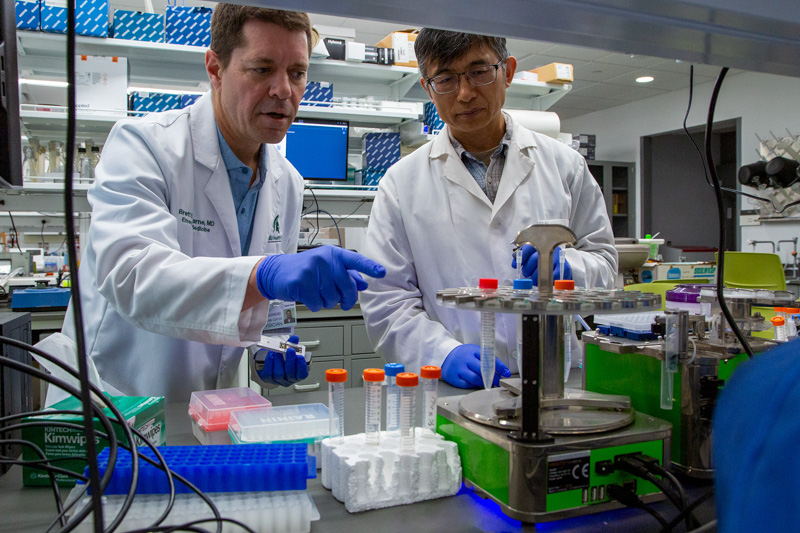
The goal for the Etchebarne Lab is to move toward real-time medical decision-making. They aim to create a tool that is highly specific, allowing clinicians to find the most likely source of a systemic failure, whether it be infectious, metabolic, or oncological, in record time. This research is designed for translation across many medical disciplines, directly impacting patient outcomes and addressing challenges in infection control and pathogen surveillance.
As software and global pathogen databases are updated regularly, the flexibility of the ICER environment allows the MSU team to stay at the forefront of the field. "We're trying to figure out how to do it faster and more accurately," says Li.
By leveraging the supercomputing power of ICER, they are turning that ambition into a reality, ensuring that the "Speed of Life" isn't just a concept, but a standard of care for every patient who walks through the ER doors. Through the fusion of clinical emergency medicine and high-performance computing, Etchebarne and Li are paving the way for a future where every second counts toward a more accurate and life-saving diagnosis.