Jump to HeaderJump to Main ContentJump to Footer
Michigan State University
  • About
    • Overview
    • News
    • Affiliations
    • Employment Opportunities
    • FAQ
    • Newsletters
    • 20th Anniversary
    Supercomputer hardware with blue and green lights and many wires connect it together.

    View and download photos of ICER's hardware.

    Photo Gallery
  • |
  • System Status
    • Overview
    • HPCC Service Status
    • ICER Status Dashboard
  • |
  • For HPCC Users
    • Overview
    • Getting Started
    • HPCC System Info
    • HPCC User Documentation
    • Buy-In Options
    • Topic of the Month
  • |
  • Research Services
    • Overview
    • Research Highlights
    • Publications
    • Citing ICER
    • Grant and Research Assistance
    • Academic Research Consulting Services
    • Opportunities and Communities
  • |
  • Training and Education
    • Overview
    • Webinars and Seminars
    • Asynchronous Tutorials
    • Classroom Support
  • |
  • Contact
    • Overview
    • Directory
ICER Institute for Cyber-Enabled Research
  • About
  • System Status
  • For HPCC Users
  • Research Services
  • Training and Education
  • Contact

< About

  • Overview
  • News
  • Affiliations
  • Employment Opportunities
  • FAQ
  • Newsletters
  • 20th Anniversary
Supercomputer hardware with blue and green lights and many wires connect it together.

View and download photos of ICER's hardware.

Photo Gallery

< System Status

  • Overview
  • HPCC Service Status
  • ICER Status Dashboard

< For HPCC Users

  • Overview
  • Getting Started
  • HPCC System Info
  • HPCC User Documentation
  • Buy-In Options
  • Topic of the Month

< Research Services

  • Overview
  • Research Highlights
  • Publications
  • Citing ICER
  • Grant and Research Assistance
  • Academic Research Consulting Services
  • Opportunities and Communities

< Training and Education

  • Overview
  • Webinars and Seminars
  • Asynchronous Tutorials
  • Classroom Support

< Contact

  • Overview
  • Directory
ICER > Research Services > Folder of Research Highlights >

Combining Artificial Intelligence and Chemistry to Identify Molecules
  • Documentation Homepage
  • HPCC Service Status
  • ICER Newsletter
Michigan State University
ICER Institute for Cyber-Enabled Research
  • HPCC Status
  • ICER Docs

ICER Institute for Cyber-Enabled Research

  • HPCC Status
  • ICER Docs

Combining Artificial Intelligence and Chemistry to Identify Molecules

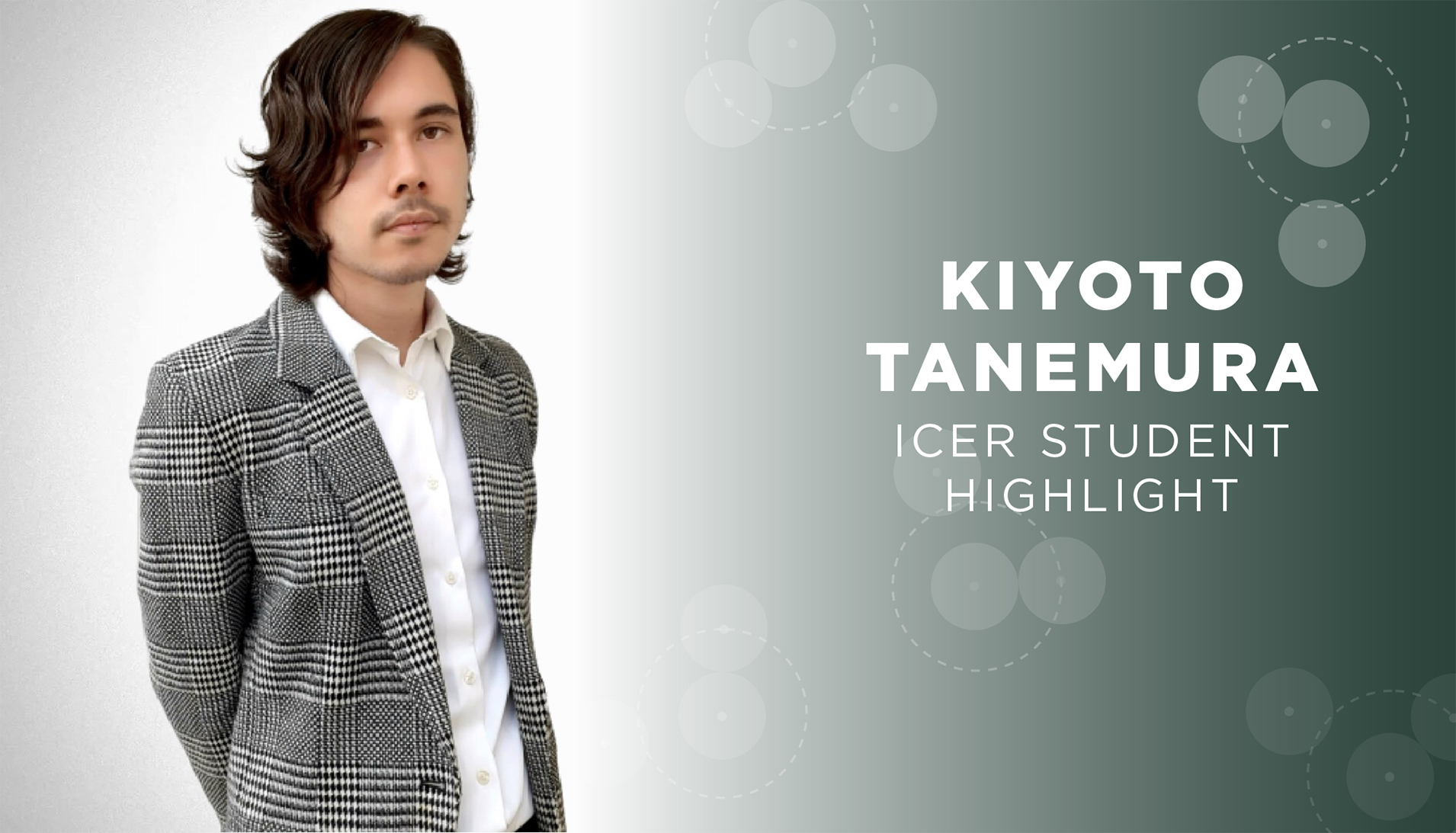
Kiyoto Tanemura student highlight

At the intersection of artificial intelligence and chemistry, Kiyoto Tanemura is working to develop a method for identifying molecules based on information about the nature of their collisions. Tanemura, an MSU graduate student studying computational chemistry in the lab of Dr. Kenneth Merz Jr., uses artificial intelligence to predict the effective area at which organic molecules collide with inert gas molecules. This property is known as the collisional cross section.

Tanemura’s research is particularly relevant when examining large quantities of data involving cellular metabolism. His work is set apart from existing methodologies due to his combined implementation of quantum mechanics and deep learning algorithms. These impressive computer algorithms can use processes inspired by the human brain on a massive scale to analyze complex data.

What makes Tanemura’s research unique is that he is navigating areas of computational chemistry that lack updated information; instead, he uses the power of machine learning algorithms to push his research forward. Training machine learning models takes considerable time and processing power, which is why Tanemura credits HPCC as an imperative tool for computing high volumes of data and performing the necessary calculations for his work.

The inspiration behind Tanemura’s research comes from the overarching questions that can only be asked in computational sciences. Prior to the popularization of artificial intelligence, there were larger constraints and fewer opportunities in this realm. Now, the largest constraints are the availability of data and compute time. Tanemura wants to be a part of the future of accelerating scientific processes through robotics and algorithms.

The ultimate goal for Tanemura is to someday use his research to rapidly determine the complete compositions of complex mixtures. This process, known as comprehensive structure elucidation, promises new and advanced technologies for medical diagnostics, clinical trials, precision medicine, phenotype determination, and more. Tanemura hopes his research motivates others to tackle these large computational chemistry problems that have significant and impactful applications.
 

Contact us

Contact Form Link

Address

Biomedical & Physical Sciences Building 567 Wilson Road, Room 1440 East Lansing, Michigan 48824-1226

Follow Us

  • Visit our Facebook page
  • Visit our page on X
  • Visit our Instagram page
  • Visit our LinkedIn page
  • Visit our YouTube page

If you're having accessibility issues, please let us know.

  • Contact Information|
  • Site Map|
  • Privacy Statement|
  • Site Accessibility|
  • Call MSU: (517) 355-1855|
  • Visit: msu.edu|
  • Notice of Nondiscrimination|

SPARTANS WILL|© Michigan State University|