Learning to Think in Parallel From Fieldwork to High Performance Computing

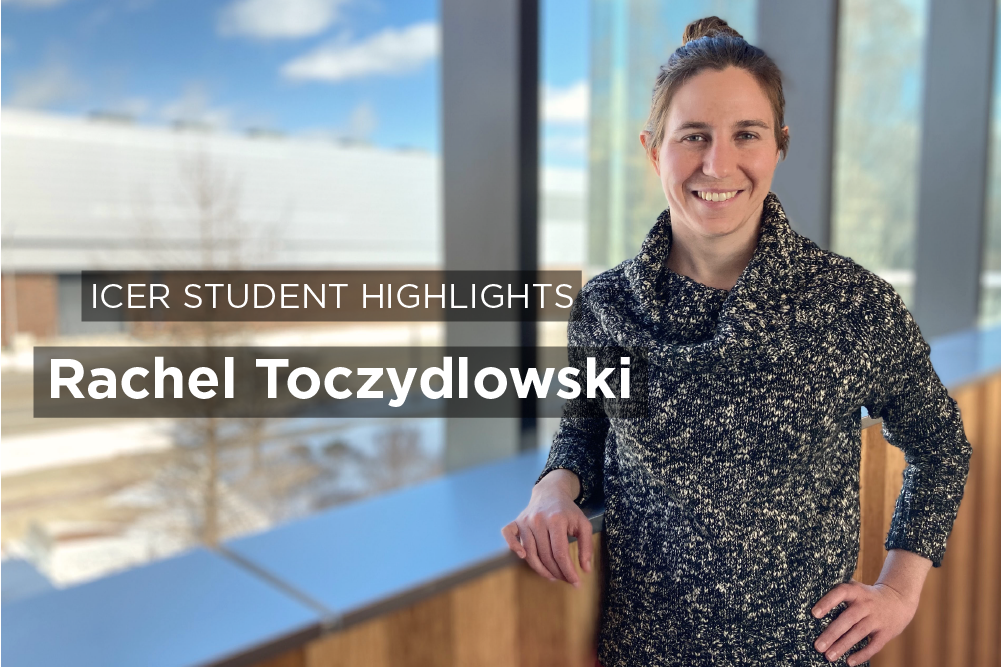
For Dr. Rachel Toczydlowski, the title Computational Biologist still seems strange. Having started her career with fieldwork, adding the descriptor “computational” did not feel natural. Incorporating high-performance computing into her repertoire has opened new avenues and changed aspects of how she approaches her research.
Toczydlowski, a postdoctoral researcher in the Integrative Biology lab of Dr. Gideon Bradburd, studies genetic diversity of natural populations. Her research can be used to guide conservation efforts. “Knowing how much genetic diversity is in a given place at a given time informs understanding of the health of organisms and their environment,” Toczydlowski explains. “For example, species with lower genetic diversity may be less able to adapt to rapid environmental changes like those triggered by climate change.”
Recent improvements to technology have made it possible to carry out this research on a larger scale than ever before. “Until about 15 years ago, it was only possible to sequence the genome of wild species in tens to hundreds of places. Recent technological advances now make it possible to sequence many thousands of places.”
Genetic diversity helps natural systems to thrive, and understanding this fundamental level of diversity can have a significant benefit to conservation management. “These genes help individuals adapt and survive in their unique environments, and we expect species that have high genetic diversity – that is – individuals with lots of variety in their genomes – to be better able to adapt to changes in their environments,” explains Toczydlowski.
“One of the biggest hurdles [to becoming a computational biologist] was shifting my thinking from ‘I need to do one task after another’ to ‘I can split these tasks up into their smallest components and do many of them at once,’” Toczydlowski recalls. “I like to think of it as the difference between running 10 loads of laundry at home (one desktop) versus doing them all at once at a laundromat (many execute nodes on the high-performance computing cluster (HPCC)).”
To put this in perspective, Toczydlowski logged around 400,000 hours of computing time on the MSU HPCC in 2021. Given that there are only 8,760 hours in a year, running many jobs in parallel allowed her to complete almost 46 years of analyses in a single year.
“Another wonderful, but initially very strange, aspect of learning how to do computational research is that the stakes are low,” Toczydlowski adds. “That is, besides erasing files, it is pretty hard to break a computer – or a computing cluster – in an irreparable way by coding. This is in stark contrast to the field and lab work I was used to, where most of the equipment is wildly expensive, easy to break, and mistakes are difficult or impossible to undo.”
Along with evolutionary ecology and computational biology, Toczydlowski is also an accomplished artist. Her artwork has impacted her research by helping her to see things as they truly are, rather than what she might assume them to be.
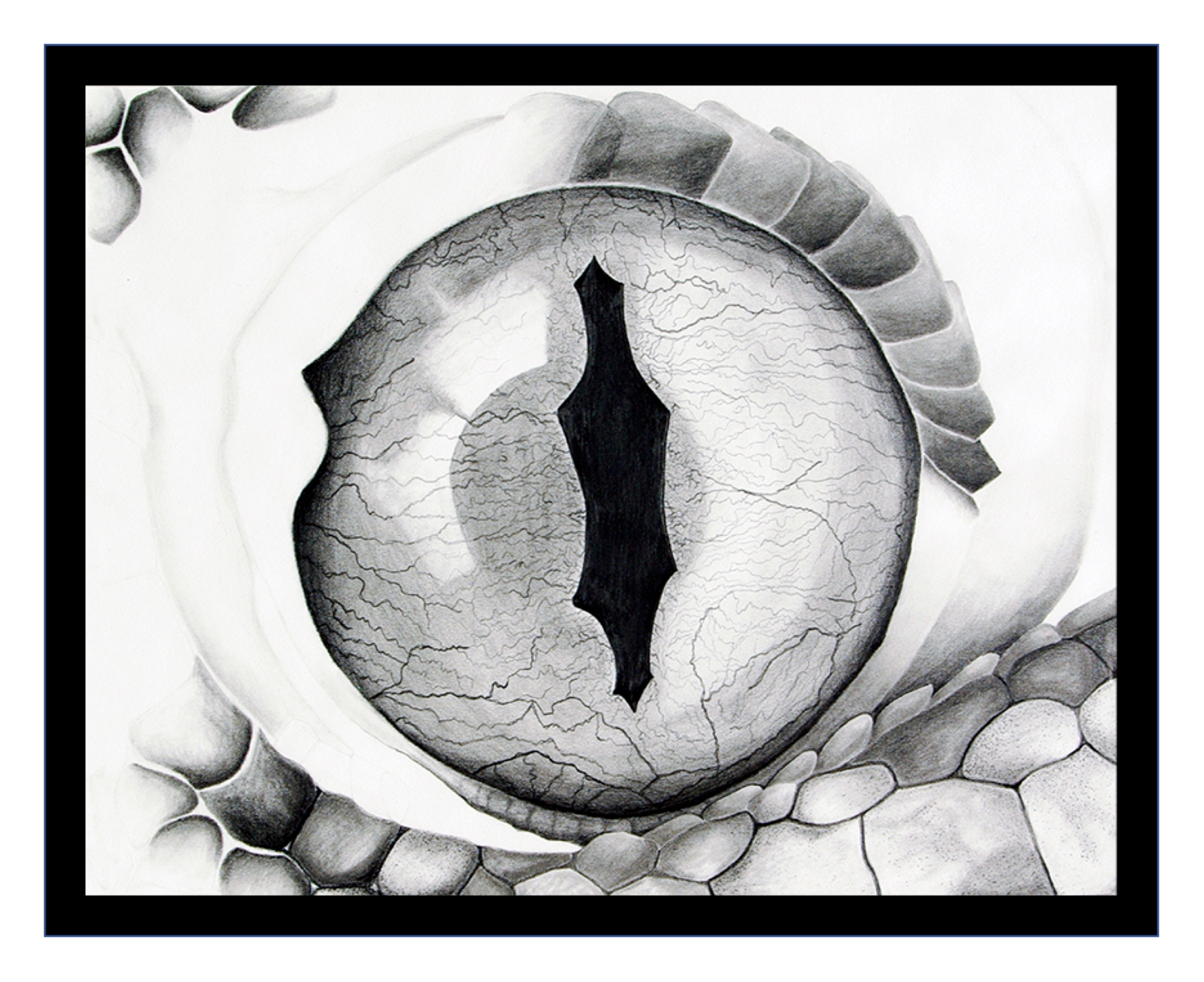
A graphite drawing of a gecko eye created by Rachel Toczydlowski. Copyright © 2020 by R.H. Toczydlowski. All rights reserved.
“So much of what we as humans are visually perceiving in the world is our brain filling in gaps for us or taking shortcuts based on what it already knows,” Toczydlowski elucidates. “To draw something accurately though, you have to learn to turn off this part of your brain that thinks it already knows what you are seeing. I use this training in my scientific career to help me approach my research with an open mind.”
Her work with drawing, painting, and photography helps her to rediscover a sense of awe for the natural world. “It reminds me why I am working to understand and protect the delicate balances that sustain our natural systems,” Toczydlowski remarks. “In my experience, artists and scientists are all just incredibly curious people trying to understand more about how the world works.”