Building Dashboards and Securing Systems: A Conversation with Malik Aljirafi
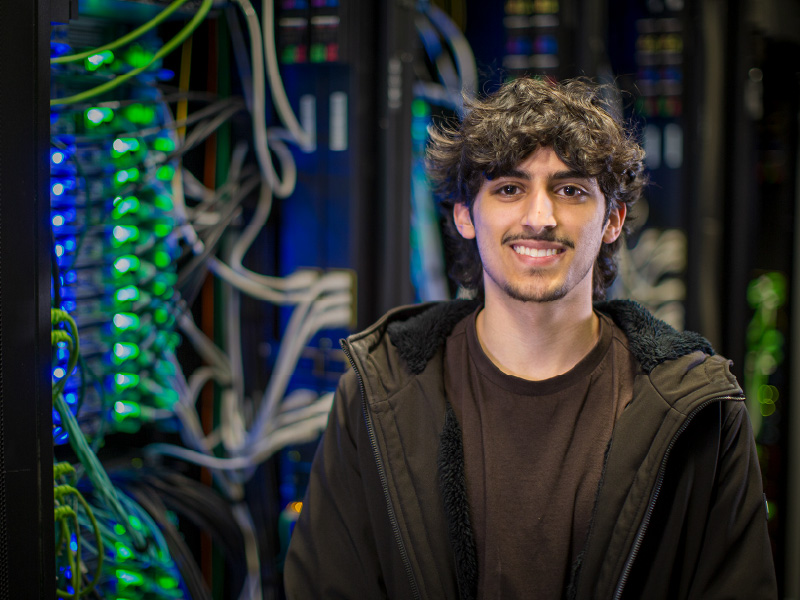
Malik Aljirafi’s path to the Institute for Cyber-Enabled Research (ICER) developed from a peer’s recommendation and a drive for technical growth. Now in his second school year with the team, Aljirafi has become a key contributor to ICER’s digital infrastructure.
Handshake to High-Performance Computing
Aljirafi first heard about the ICER Intern Program through a friend who had interned with ICER during his sophomore year. After discovering the position details on Handshake, Aljirafi knew it was the perfect venue to gain experience.
"I saw this as an opportunity to develop my skills through hands-on work with real-world technologies," says Aljirafi. Since joining last May, he has immersed himself in the technical ecosystem of the high-performance computing center (HPCC), finding it to be a "really great experience so far."
Visualizing the Pulse of the HPCC
Aljirafi’s primary focus has been on the development of a new performance dashboard, which will be made public in the coming months. The previous iteration was outdated and lacked the scalability and accessibility needed for a growing HPCC. Aljirafi was tasked with creating a platform that was more accessible and aesthetically intuitive. The dashboard serves as a health monitor for the HPCC by tracking active processes, storage utilization, data download rates, and submitted jobs in real-time.
The "Mini" Supercomputer: Raspberry Pi Clusters
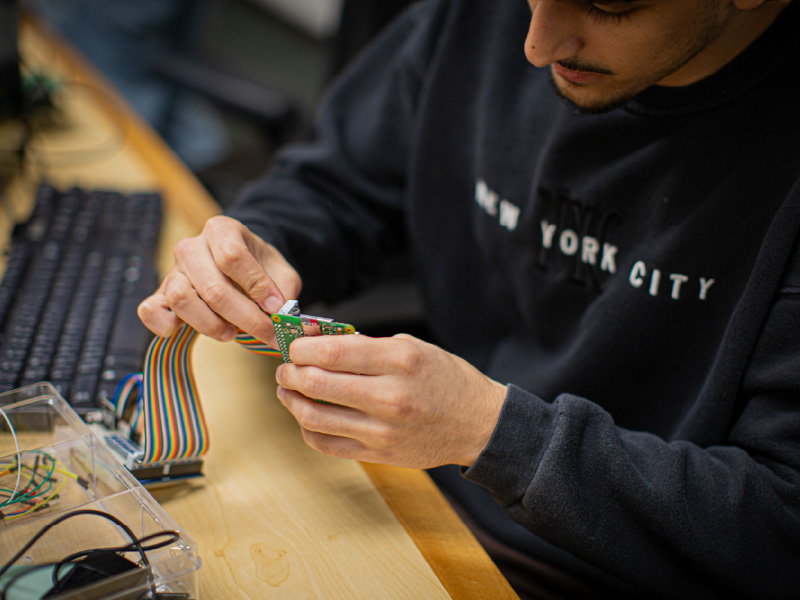
Beyond the dashboard, Aljirafi has been working on a hardware-centric project involving a Raspberry Pi cluster. Raspberry Pis are small computers with all the components built on a single board measuring roughly two to three inches wide. By connecting eight Raspberry Pis, Aljirafi has helped to create a miniature representation of how a large-scale HPCC functions. This project is specifically designed for outreach.
“People can learn how more computers working together would make computing faster, easier, and more efficient for complex problems and research," explains Aljirafi.
To help people understand parallel computing, he uses a program that gives participants control over changing the physics of colorful spheres in a fluid dynamics simulation. They can choose how many Pis to activate at a time to distribute the workload, then play with variables such as the density, gravity, and viscosity.
Future Goals in Cybersecurity
Aljirafi’s ultimate career goal is to work in cybersecurity as a security operations analyst or penetration tester. Through his ICER internship, he has already begun building a professional toolkit.
"I learned SQL, bash scripting, SQLite databases, and those types of skills and experiences used all over cybersecurity,” says Aljirafi. For students looking to follow in his footsteps, he recommends working on cybersecurity certifications and staying active in cybersecurity clubs.
Goals and Goalie Saves
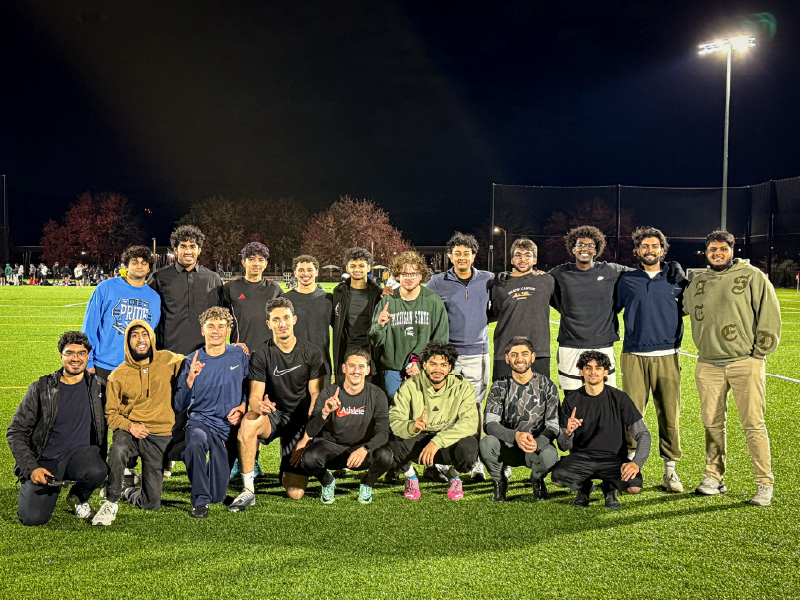
Even a dedicated coder needs to step away from the screen, and Aljirafi is a regular on the intramural soccer field. While he admits his team recently suffered a tough 4-0 loss, his passion for the sport remains high. This love for soccer even bleeds into his gaming habits; his favorite video game is Rocket League, which combines cars and soccer. Whether he’s securing a network or defending a goal, Aljirafi’s focus on performance and protection makes him a vital part of the ICER team.